Green and sustainable logistics
Green and sustainable logistics are two of the most important keys to a modern and future-proof supply chain. For us, sustainability is about more than reducing emissions. It's about combining environmental responsibility with social development and economic efficiency. Our work on sustainable logistics is based on long-term solutions that work in practice and create value for both our customers and society.
Our logistics teams have been working on energy-efficient warehouses, electrification and sustainable flows for many years, in close co-operation with both customers and technical partners. This allows us to guide you with fact-based recommendations and concrete results.
Environmental sustainability
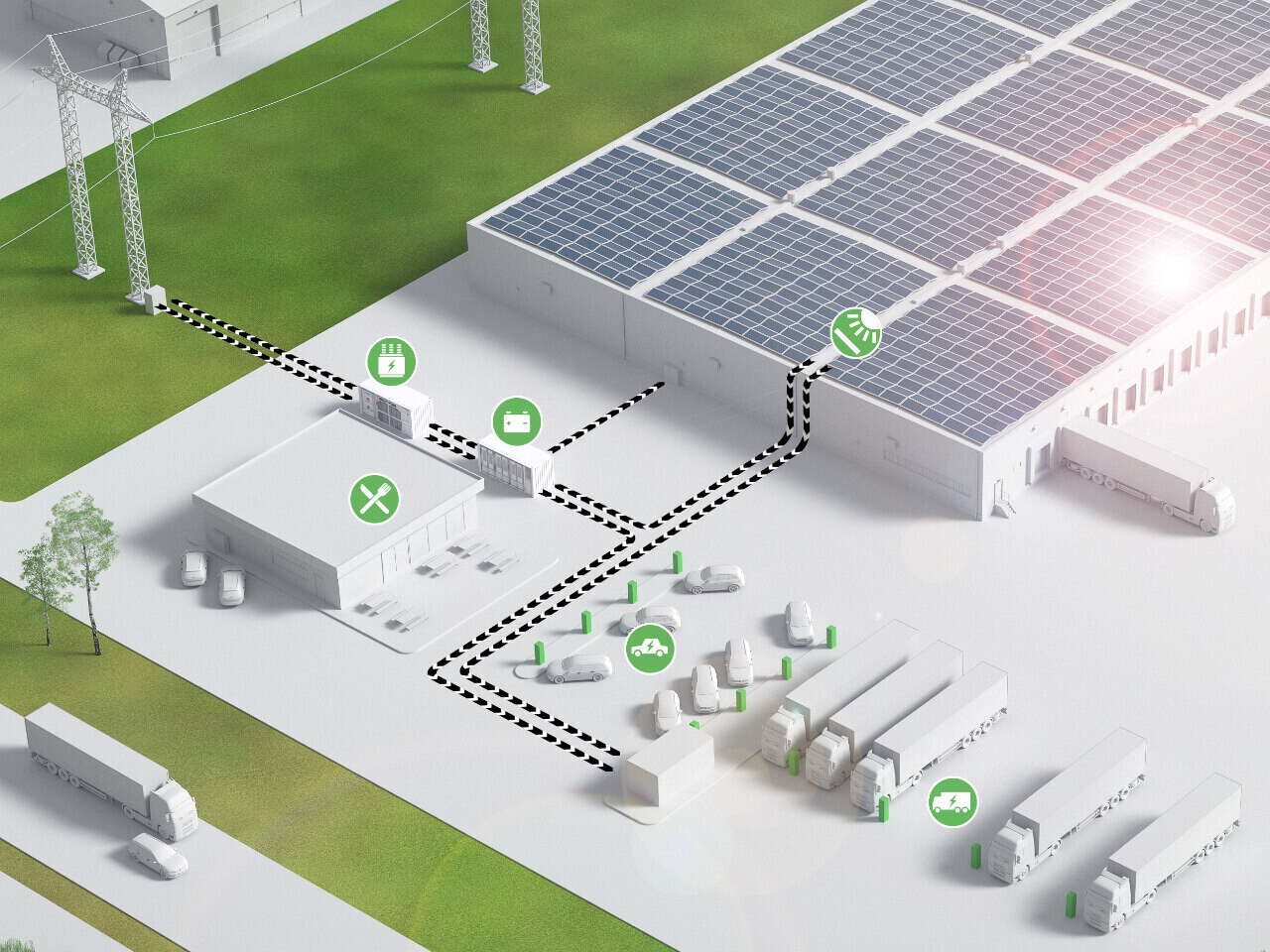
3PL with us is a resource-efficient model that reduces the climate footprint right from the start. With Greenbox, transport can also become completely fossil-free by our solar cell plants producing green electricity that is stored and used for both warehouse operations and vehicles. In this way, CO2 emissions can be greatly reduced without affecting operation or availability.
Greenbox has been developed together with energy specialists and tested in actual logistics operations.
Social sustainability
For us, social sustainability is about creating safe and inclusive workplaces. We give people from different backgrounds the opportunity to enter the labour market and develop over time. We work actively on gender equality, accessible work environments and targeted support for those who are far from the labour market. This contributes to a stable and sustainable workplace - an important part of a modern logistics business.
Over the years, we have helped hundreds of people into their first jobs in co-operation with municipalities and education providers.
Economic sustainability
A sustainable logistics solution also needs to be economically sustainable. Through more efficient flows, optimised staffing and reduced resource losses, we create cost-effective storage and transport arrangements. The result is a lower carbon footprint, better capacity utilisation and strengthened competitiveness for our customers.
Our analyses show that companies implementing our sustainable logistics models often reduce their costs by 10-30 %.
Greenbox for electrified and green logistics
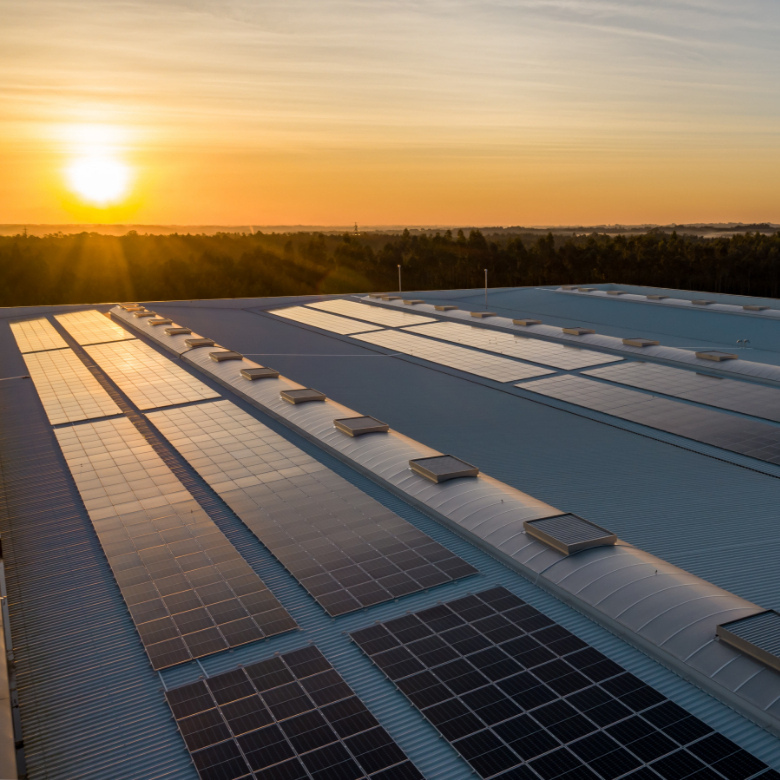
The transport sector's goal of significantly reducing emissions requires a new infrastructure. Greenbox is our solution to make this possible. Solar panels on logistics properties produce green electricity that is stored in batteries and used to charge vehicles. All energy management is coordinated via a common connection that creates power balance and supports grid stability.
As the logistics properties are strategically located near major transport routes, charging can take place where it is most useful, while the solar cells do not need to take up land space. This maximises resource efficiency and provides the logistics industry with a concrete opportunity to reduce its climate impact.
The model is developed by our own energy specialists together with Soltech engineers and follows the same principles used in other large European electrification projects.
The transport sector's goal of significantly reducing emissions requires a new infrastructure. Greenbox is our solution to make this possible. Solar panels on logistics properties produce green electricity that is stored in batteries and used to charge both heavy and light vehicles. All energy management is coordinated via a common connection that creates power balance and supports grid stability.
As the logistics properties are strategically located near major transport routes, charging can take place where it makes the most sense, while the solar cells do not need to take up land. This maximises resource efficiency and truly reduces climate impact.
Boxflow has set the goal of being carbon neutral by 2030 and Greenbox is one of our most important initiatives to achieve this, both in our own operations and for our customers.
3PLs that reduce resource use
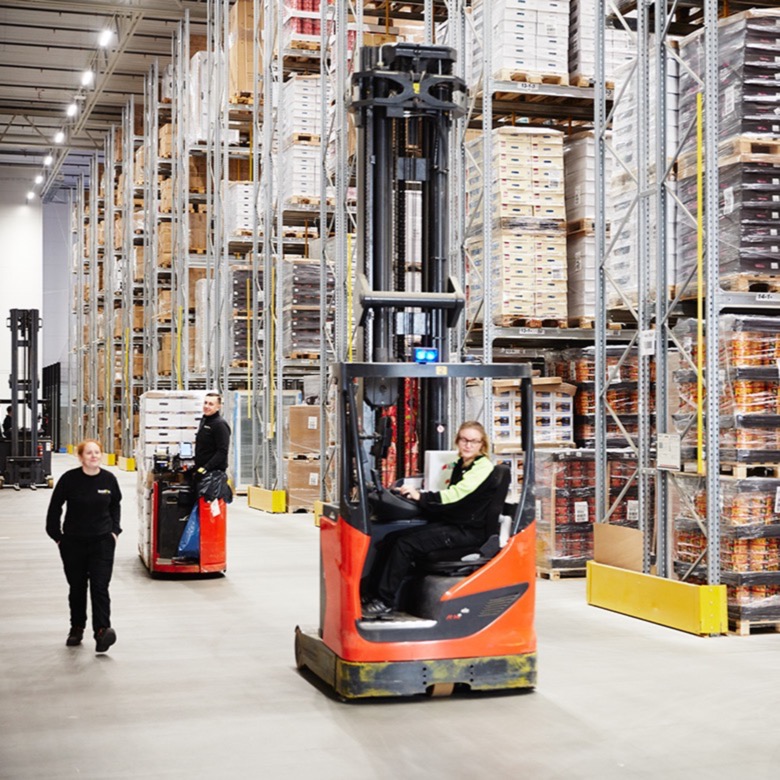
The benefit of 3PL is that resources can be shared and used more intelligently. Our energy-efficient buildings and shared workflows make better use of storage space, skills and equipment. This results in lower overall energy consumption and reduces the impact on the environment.
Boxflow's sustainability strategy - our long-term responsibility
We work on the basis of a sustainability strategy that permeates both warehouse operations and transport. The goal is for all warehouse sites to be operated energy-efficiently and with minimal climate impact. One example is Greenbox, which enables companies to achieve their environmental goals faster with clear traceability at every stage.
We work with customers and partners who share our vision of sustainable development. In e-commerce, we are actively working to reduce packaging volumes, improve recycling and develop more sustainable return processes.
The policy follows established CSR guidelines and has been developed together with experts in energy, health and safety and logistics.
WHISTLEBLOWER FUNCTION
Our whistleblowing function is designed to enable you to report suspicions of serious wrongdoing. The whistleblowing function handles cases that concern all the company's employees. For those who have comments on the organisation in general, this should primarily be taken up with the nearest manager or via the following email: info@boxflow.com.
The whistleblower will remain anonymous during the process, unless otherwise stated in the notification.
FAQ on green and sustainable logistics
What does green logistics mean in practice?
Green logistics is about reducing resource consumption and creating flows that are more energy efficient and sustainable over time. In practice, this means optimising transport, planning and storage areas to reduce both costs and environmental impact. With Greenbox, we are taking this a step further by electrifying transport and using renewable energy in both storage and distribution. The solution is being developed together with Soltech Energy and is based on an energy model that has already been tested in several logistics properties.
How does electrified transport contribute to sustainable logistics?
Electrified transport contributes to sustainable logistics by significantly reducing emissions from road transport while creating a more energy-efficient and future-proof flow. Electric vehicles have a lower climate impact per kilometre driven and are an important tool when companies want to reduce their emission levels without compromising delivery performance.
Examples of benefits of electrified transport:
- Reduces CO2 emissions and other air pollutants with every journey.
- Has higher energy efficiency than diesel and petrol vehicles.
- Reduces noise, improving the working environment and the urban environment.
- Reduces dependence on fossil fuels and stabilises energy costs.
- Strengthens the company's sustainability profile and enables the fulfilment of environmental objectives and future regulatory requirements.
Can companies reduce their CO2 emissions by using Boxflow solutions?
Yes, you can. By using Boxflow's solutions, companies can reduce their CO2 emissions in several ways. Our ways of working, technical platforms and facilities are designed to create resource-efficient flows and more sustainable logistics in practice.
Examples of how our solutions contribute to lower emissions:
- Electrified transport where vehicles are recharged via our battery park powered by solar cells, Greenbox.
- Shared resources through TPL arrangements, reducing transport, empty runs and overall CO2 emissions.
- Sustainable packaging and efficient waste management that reduces material consumption and waste volumes.
- Energy-efficient warehouse buildings and operating practices that reduce energy consumption in daily operations.
What does it take to start working with green logistics in existing warehouses?
Starting to work with green logistics in an existing warehouse means developing the organisation, processes and technology. The aim is to reduce environmental impact without losing efficiency, and often several of the actions can be implemented in stages.
Examples of what is required to get started:
- Mapping of current situation - energy, transport, waste, procedures and equipment.
- Set objectives and action plan based on the needs of the organisation.
- Energy efficiency of the warehouse building, lighting and technical equipment.
- Electrification and streamlining of internal logistics, such as forklifts and internal transport.
- Sustainable packaging and structured waste management.
- Co-operation with suppliers and carriers on routes, fill rates and environmental choices.
- Involving staff through procedures, training and clear ways of working.
- Continuous monitoring and improvement to see results and prioritise next steps.
How to combine sustainable logistics with cost efficiency?
Sustainable logistics and cost efficiency often go hand in hand. Many sustainable actions lead directly to lower costs through smarter use of resources and more efficient processes. It is therefore not a question of choosing between environmental and economic benefits, but of finding solutions that deliver both.
Example of how sustainable logistics reduces costs:
- Reduces energy consumption in warehouses and terminals.
- Reduce fuel and transport costs through better planning and fill rates.
- Minimising waste and material use through smarter packaging.
- Increases productivity in warehouses and transport.
- Provides better control of flows and reduces waste.